Thembi Bheka. Apply
About Advisory AI Implementation Speaking Africa Writing Apply to work with Thembi

AI implementation for organisations

Most AI programmes fail because nobody decided what not to automate.

Teams buy tools, run a pilot, and discover six months later that nothing changed except the software bill. The failure is almost never technical. It is that nobody made a clear decision about which work should move, which work must not, and what happens to the people in between.

Private sectorPublic sectorAssociations
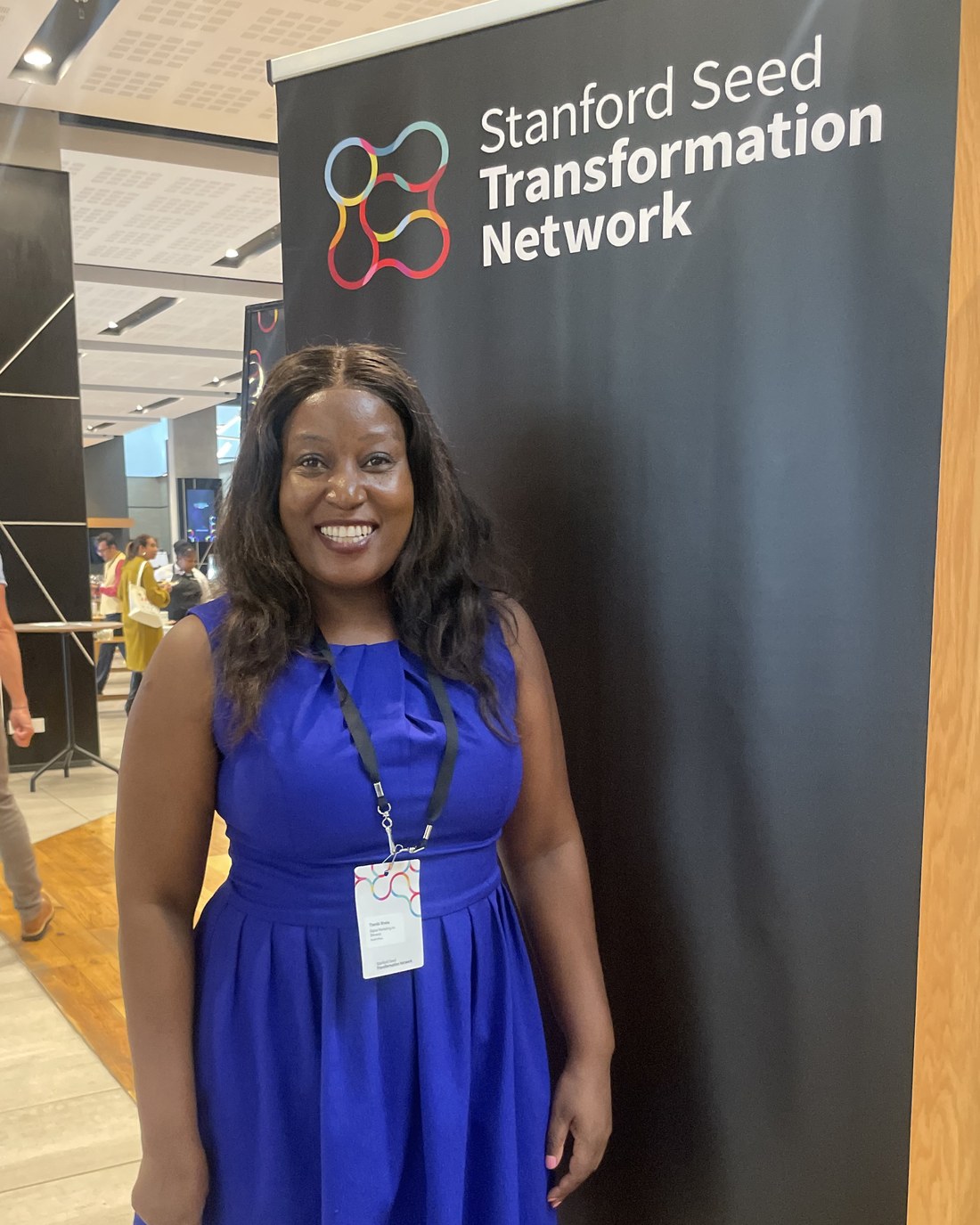
Thembi Bheka at the Stanford Seed Transformation Network

Stanford Seed Transformation Network

50,000+

People whose work I watched AI absorb

I built and ran the agency that trained them, and I closed it when the category went. That is a different qualification from having read the research.

2

Phases, in this order, always

An exposure audit before anything is built. You can stop after phase one and still have got your money's worth.

0

Tools sold, referred or resold

No vendor relationships, no commissions, no platform to push. The recommendation is the product.

Stanford Seed Transformation Network Coralus (formerly SheEO) Venture Available for public procurement

Why most of this goes wrong

Four failures, and they are all the same failure.

I have watched this from an unusual angle. Not as a vendor selling transformation, and not as an analyst describing it, but as an operator whose entire business model was on the losing side of it.

01

Tool first, decision never

A licence gets bought before anyone has written down which specific tasks it is meant to replace. Adoption is then measured in logins rather than in hours or errors removed, and nobody can say whether it worked.

02

Automating the wrong half

The tasks that are easiest to automate are often the ones carrying the judgement, the relationship or the accountability. Removing those looks efficient for two quarters and expensive for years.

03

The people question left until last

Staff work out what is happening long before leadership says it, and they behave accordingly. If you have not decided what happens to a role before you automate part of it, you will lose the person and the knowledge together.

04

No line between exposed and protected

Every organisation has work AI takes cheaply and work it makes more valuable. Almost none have written down which is which. Until that line exists on paper, every AI decision is a guess with a budget attached.

How it works

Audit first. Build second. Never the other way round.

You can engage phase one on its own and take the findings to whoever you like, including another supplier. That is deliberate. If the audit only has value when I also do the build, it is not an audit, it is a sales call.

01

Phase one. Fixed scope, fixed fee.

The AI Exposure Audit

A structured review of how work actually moves through your organisation, and where AI genuinely changes the economics. Delivered as a written report and a working session with your leadership team, not a slide deck left on a shared drive.

  • A task-level map of what is exposed, what is protected, and what is ambiguous
  • The line written down: work to automate, work to augment, work to leave alone
  • Ranked opportunities with effort, risk and expected saving against each
  • The people implications stated plainly, including roles that change shape
  • Governance and data-handling risks flagged before they become a procurement problem
  • A build plan you own, whether or not I deliver it
You should start here if AI keeps coming up at board or executive level and nobody can yet say what it means for your specific operation, or a pilot has already stalled and you need an honest read on why.
02

Phase two. Scoped from the audit findings.

The Build

Implementation of what the audit recommended, in priority order, with your team involved throughout so the capability stays in the building. We start with the workflow that has the clearest return and prove it before touching anything else.

  • Working systems in production, not prototypes
  • Documentation and internal training so the work does not depend on me
  • Human checkpoints designed in where accuracy or accountability requires them
  • Measurement agreed before the build, so success is not decided afterwards
  • Staged delivery, with a genuine stop point at the end of each stage
The rule I work to If a workflow cannot show its result inside one quarter, it is the wrong workflow to start with. Ambition is fine. Ambition as the first deliverable is how these programmes die.

Where the work lands

Operations, communications, and the training that has to follow.

The audit covers the whole organisation. The build concentrates where AI is currently most useful and least risky, which in most organisations is the same handful of places.

Operations

Internal workflow and administration

Document handling, reporting, intake and triage, correspondence, scheduling, knowledge retrieval. The work that quietly consumes the most staff hours and produces the least argument when it moves.

Communications

Marketing and stakeholder communications

Content production, campaign operations, reporting and analysis, consistent messaging at volume. Built so that tone and accuracy stay under human control rather than drifting.

Capability

Digital and AI literacy training

Because a system nobody understands gets quietly abandoned. Delivered to teams at the level they are actually at, which is usually further back than leadership assumes.

Who this is for

Three kinds of organisation, one shared problem.

All of them have work that AI changes, staff who already know it, and no written decision about what happens next.

Private sector

Firms and mid-size businesses

Professional services, advisory practices and operating businesses where a meaningful share of the work is knowledge work, and margin depends on how many hours it takes.

Public sector

Government and agencies

Departments and agencies that need AI adoption done with governance, documentation and defensibility attached, and a supplier who will say plainly what should not be automated.

Membership

Associations and non-profits

Organisations serving members or communities, usually with small teams carrying more administration than they can sustain, and real constraints on budget and risk.

For procurement teams

Set up to be bought properly.

Bheka Advisory responds to public tenders and works within standard procurement processes, including RFPs, RFQs, RFIs and standing offer arrangements. Service categories include AI and digital transformation, strategic advisory, marketing and communications, and education and digital literacy training.

A capability statement, references and insurance details are available on request. If you are preparing a solicitation and want to know whether this is a realistic fit before you publish, say so in your message and I will tell you honestly.

Based in Canada. Delivery available remotely or on site.

Enquiries

Tell me what is not working.

Whether that is a stalled pilot, a board asking questions nobody can answer, or a solicitation you are drafting. You will get a straight reply about whether this is a fit, and if it is not, I will say so.

Goes straight to Thembi. Replies within 48 hours. You can also write to support@thembibheka.com.