What I built, and what happened to it
I trained fifty thousand women for work that no longer exists.
I built an agency that taught women from disadvantaged communities across Africa to work as virtual assistants for clients around the world. It worked. Then AI came for exactly that tier of work, and it went faster than anyone had warned us it would.
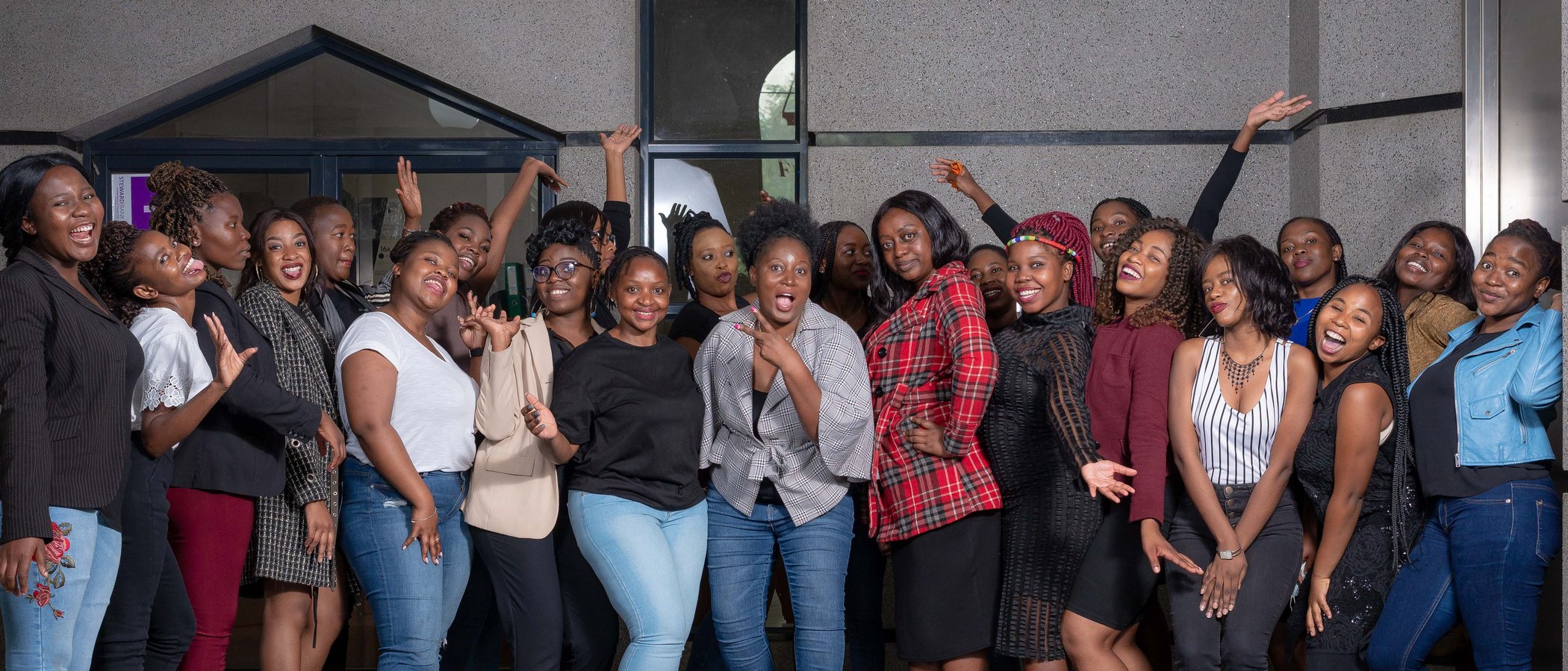
50,000+
Women trained and placed into paid remote work
Taught to work as virtual assistants for clients in North America, Europe and Australia.
$5
What I arrived in Canada with
Which is why I never believed the gap was ability. It was access first, and then it was visibility.
0
Of those roles that turned out to be safe from AI
Not some of them. The whole category, inside a few years. I watched it happen from the inside.
How it started
It started with one hire in Kenya.
I left Zimbabwe and arrived in Canada with my daughter and five dollars. I had trained as a nurse. None of it transferred. I built a business anyway, because the alternative was worse.
When it grew past what I could carry alone, I hired a virtual assistant from Kenya through Upwork. She was extraordinary. She was also earning from her home, in currency that changed what was possible for her family, doing work that any capable person could be taught in weeks.
That is when the maths became obvious. There was no shortage of intelligent, organised, hard-working women in Africa. There was a shortage of two things: the specific skill global clients were paying for, and any evidence that someone like them was allowed to apply.
The second was always the harder problem. The technical skill took weeks. Believing you could charge for it took much longer, and that is where most of the work went.
What it became
An agency, a training engine, and fifty thousand women.
Most programmes teach African women to code, or to use a computer, and then leave them at the hardest part: finding somebody willing to pay. We built ours backwards from the client, which is why it scaled.
We taught what was actually being bought
Funnel builds, launch support, inbox and calendar management, CRM administration, podcast and content production. Specific, in demand, and paid for in stronger currency than the local market offered.
We trained against real client work
The agency gave the training something most programmes never have: live briefs, real deadlines, and clients whose standards decided whether the work was good enough. Nobody graduated on theory.
We connected them to the work
A skill with no route to a client is a hobby. Placement and introductions turned a training programme into an income, and every woman who succeeded became the proof that convinced the next ten.
And it moved money into households
Not stipends, not certificates. Wages, in foreign currency, earned from a laptop at home. For many of those women it was the first income that was entirely theirs, and an income of your own changes the range of choices available to you.
What ended it
AI did not take some of that work. It took the category.
The tasks we had trained fifty thousand women to do were, in hindsight, exactly the tasks a language model does well. Drafting, formatting, scheduling, summarising, building the same funnel for the hundredth time. Work with a clear input, a clear output, and no judgement in the middle.
Clients did not announce it. They stopped hiring. Then they cut hours. Then rates that had been life-changing became rates nobody could live on, because the alternative cost twenty dollars a month and never slept.
So we closed the training and wound the agency down. I am not going to dress that up. It was the right call and it is still the hardest thing I have had to do in business.
What it taught me
I am not speculating about AI. I watched it happen to fifty thousand people I was responsible for.
Everything I advise on now came out of that. Not from a report, and not from a conference panel. From running the experiment at full scale and losing.
Here is what the loss actually taught me. The work that disappeared was work sold on capability alone. It was described by task, priced by the hour, and interchangeable by design, because interchangeable was the entire point of the model. That is precisely the profile AI takes first, and it does not matter whether the person doing it sits in Bulawayo or Boston.
What survived, in the same market, at the same time, were the people who had a name attached to a specific judgement. The ones a client asked for by name because of how they think rather than what they can produce. Nobody replaced them with a subscription, because there was nothing obvious to compare them to.
The difference between those two groups was never talent. It was whether the market could tell them apart.
So when I sit with a consultant who is excellent and still being priced against someone in their third month, I am not offering a theory about positioning. I am telling them what I watched happen to people who did not have one, and how little time there was between the first sign and the end of it.
On the women
The skills did not vanish. The category did.
Fifty thousand women learned to work with international clients, to hold a deadline across time zones, to be trusted with somebody else's business. None of that was undone by a language model. What went was one specific route to being paid for it.
Many of them have moved on to work AI has not touched, and some are now running the tools that displaced them. I am proud of every one of those outcomes and I take no credit for them.
What I do still carry is the reason any of it mattered. A woman with her own income has options that a woman without one does not. That was true before the agency, it was true while it ran, and it is why money is never a small subject to me. It is very often the door.
The keynote
Most speakers on AI are forecasting. I am reporting.
This is the talk. What I built, what it did for fifty thousand households, how quickly it ended, and what that says about which work survives and which people do. It suits conferences, summits, leadership programmes, and any room that has had enough of AI predictions from people with nothing at stake.